Old Meridian Inside New Meridian
In 1990, Meridian was home to fewer than ten thousand people; today it's Idaho's second-largest city. That explosive arc means most of its housing postdates the asbestos era entirely — and it means the exceptions stand out. Old Town's blocks around Main Street and Meridian Road hold early-1900s storefronts and bungalows from the city's creamery-and-farm decades. Along the section-line roads — Linder, Ten Mile, Black Cat, McDermott — pre-1990 farmhouses and their shops, barns, and pump houses sit on parcels now surrounded by rooftops. And the first rings of growth themselves are aging: houses from the 1970s and 1980s near Cherry Lane and Fairview are entering their first big remodel cycle, still inside the window where suspect materials deserve testing.
The result is a city where the average house needs no asbestos conversation at all, but where the specific house you're remodeling, buying, or demolishing very well might. Knowing which situation you're in is exactly what a test is for.
When Meridian Property Owners Call
- Old Town renovations. Converting an early-1900s house near the downtown core into offices or a shop touches plaster, flooring layers, and old duct wrap — three classic suspects in one project.
- Farmhouse remodels and teardowns. Developers and families alike inherit pre-1990 structures on acreage. Demolishing one as part of a development project can pull it into federal notification territory, which starts with a survey.
- 1970s–80s remodel wave. Kitchens and basements in Meridian's earliest subdivisions carry era-typical materials: textured ceilings, vinyl flooring stacks, and occasionally vermiculite in the attic.
- Real-estate diligence. When an older listing trades in a market this fast, testing during the inspection window beats renegotiating after a contractor's discovery.
- Commercial refreshes along Fairview, Cherry Lane, and Meridian Road, where mid-century buildings hide beneath modern facades.
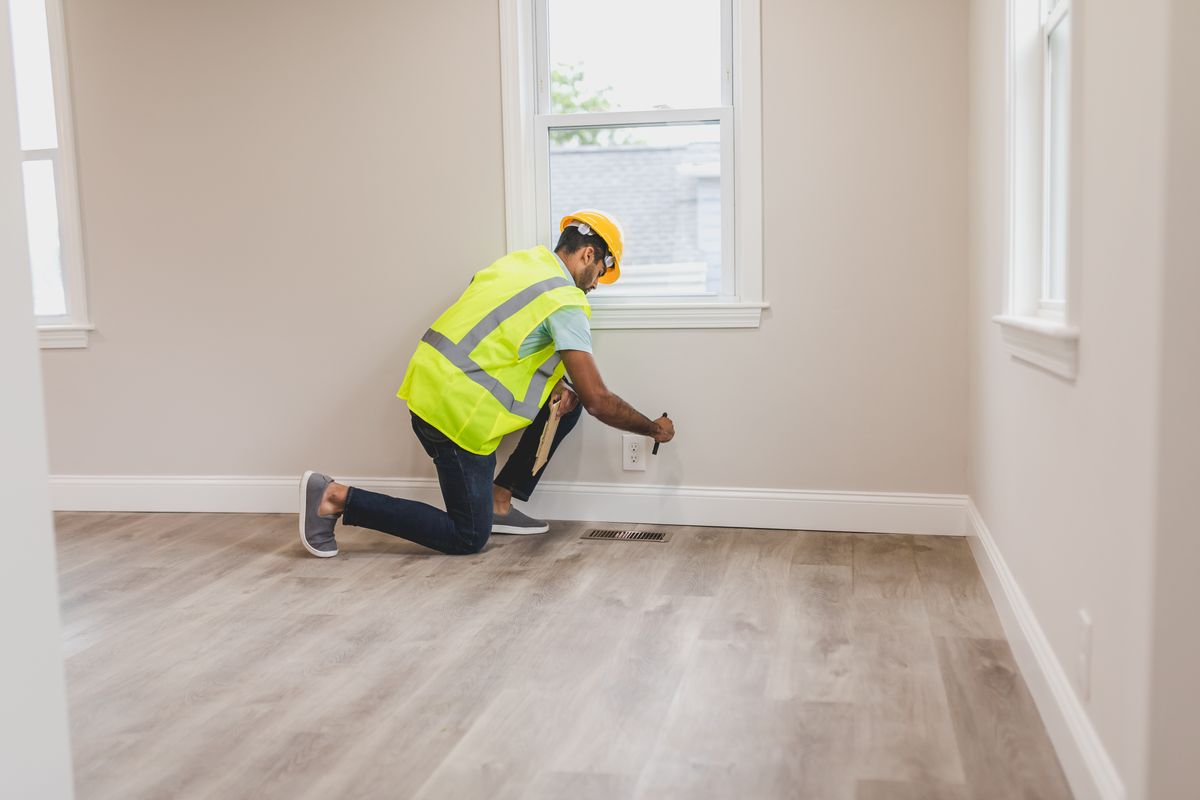
What Gets Tested in Meridian Buildings
The suspect list mirrors the wider valley, weighted toward farm-era and first-boom construction:
- Sprayed and textured ceilings in pre-1990 houses awaiting a scrape
- Vinyl tile, sheet-flooring backing, and mastic — often several layers deep in farmhouse kitchens
- Cement-asbestos siding and flue pipes on farm outbuildings and older homes
- Vermiculite attic insulation under later blown-in retrofits
- Plaster, joint compound, and duct insulation in Old Town-era structures
- Full pre-renovation and demolition surveys for additions, commercial work, and teardown lots
How It Works From a Meridian Address
Distance is no obstacle — Meridian sits in the middle of the metro, minutes off I-84 and the valley's crosstown arterials, so partner professionals schedule visits there as readily as anywhere in Boise. You call or send the form; a certified, insured local pro quotes the job free; sampling happens at your convenience with wet methods and sealed containers; and an NVLAP-accredited laboratory returns results in about 2–5 business days, faster on rush. The written report gives your contractor, buyer, or demolition firm exactly what they asked for.
A Note on Meridian's Teardown Math
Land value does strange things in a city growing this fast: an aging farmhouse on a developable parcel is often worth less than the ground under it, and demolition becomes the plan. Remember the federal wrinkle — a single-family home is generally exempt from the asbestos NESHAP on its own, but fold that same house into a commercial or multi-structure development and the exemption can fall away, bringing survey and EPA Region 10 notification duties with it. Developers who order the survey while the deal is still in diligence never end up racing the 10-working-day notification clock.
A Quick Age Map for Meridian Properties
Because construction era drives the whole asbestos question, it helps to know roughly where Meridian's eras sit on the ground:
| Era | Where you'll find it | Testing posture |
|---|---|---|
| Pre-1940 farm town | Old Town grid near Main St. & Meridian Rd.; scattered farmsteads on section lines | Test before any disturbance — multiple material generations likely |
| 1950s–1980s first ring | Blocks around Cherry Lane, Fairview, and the older stretches of Linder and Locust Grove | Squarely in the suspect window; test materials your project touches |
| 1990s–present boom | Nearly everything else, from Paramount to South Meridian | Testing rarely needed for the structure itself |
The assessor's records — or simply the plat name — usually settle which bucket a property falls in before anyone spends a dollar. When you request a quote, era is the first thing the professional will confirm.
One more Meridian-specific pattern worth naming: annexation. Parcels that spent decades as rural Ada County ground keep getting pulled into city limits, and with annexation comes redevelopment pressure on whatever structures came along for the ride. If you're the buyer, seller, or agent on one of these transitional properties, the era of the improvements — not the freshness of the surrounding subdivisions — is what determines whether asbestos diligence belongs in the deal. It usually does, and settling it costs a fraction of what the uncertainty does at the negotiating table.
Fitting Testing Into a Meridian Contractor's Schedule
Trades in this market book out weeks ahead, and nothing burns a slot like a mid-job discovery. The clean sequence for an older Meridian property: test while you're still in design or bidding, hand the lab report to every bidder so their numbers reflect reality, and let the abatement step — if one is needed — happen before your general contractor mobilizes. Builders who work the valley's older stock increasingly require this order anyway; arriving with results makes you the easy client and keeps your remodel off the back burner.
Meridian Questions, Answered
My subdivision house was built in 2004. Is there any reason to test?
Almost never — post-1990s tract construction sits outside the practical risk window, and testing it is rarely worth your money. The exceptions are salvaged or imported materials and any older structure on the property. We'd rather tell you that than sell you a test.
Can one visit cover the house and the old shop out back?
Yes, and it should — outbuildings frequently hold the oldest materials on a parcel, especially transite siding and flue pipe. Bundling structures into a single visit keeps the quote efficient.
We're mid-remodel and just found suspicious floor tile. Now what?
Stop disturbing that area, keep foot traffic off the debris, and call. A sampler can usually get there quickly, and rush lab service turns the answer around in a day or two — a short pause beats contaminating the site.
Do you cover addresses just outside Meridian city limits?
Yes. County pockets, the Ten Mile and McDermott corridors, and neighboring Kuna, Eagle, Star, and Nampa are all inside the normal service area.
Testing That Keeps Pace With Meridian
Free quotes, accredited local professionals, and lab answers fast enough for this market.