Boise Remodels Fast — and Its Housing Is Older Than It Looks
The Treasure Valley has been one of America's fastest-growing metro areas for years, and much of that energy pours into renovation: hundred-year-old bungalows in the North End, mid-century ranches across the Bench and Vista, postwar cottages in the old railroad cores of Nampa and Caldwell — walls opened, flooring pulled, ceilings scraped. Boise more than doubled in population between 1960 and 1970 alone, so a huge share of the metro's houses went up while asbestos was a standard ingredient on American job sites.
Manufacturers put it into an astonishing range of products: sprayed "popcorn" texture, 9×9-inch vinyl floor tile and the black mastic beneath it, cement-asbestos "transite" siding and flues, pipe and duct insulation, joint compound, plaster, roofing, and vermiculite attic fill. Some uses ended in the 1970s — spray-applied surfacing in 1973, wall-patching compounds in 1977 — but a sweeping 1989 ban was mostly overturned in court in 1991. The working assumption: if the structure predates about 1990, treat suspect materials as unknowns and test before disturbing them.
No one can identify asbestos by eye — only lab analysis of a properly collected sample answers the question, usually within days.
What Gets Sampled in Treasure Valley Buildings
Popcorn & acoustic ceilings
The classic reason Boise homeowners call. A few small samples tell you whether that texture can be scraped as ordinary drywall work or needs professional handling. Popcorn ceiling testing →
Vermiculite attic insulation
Loose, pebble-like attic fill. Most of the U.S. supply came from a contaminated mine in Libby, Montana; the EPA advises treating it as asbestos-containing until proven otherwise. Vermiculite testing →
Floor tile, siding & pipe insulation
Old 9×9 tile, mastic under sheet vinyl, cement transite siding, and the chalky lagging on old heating pipes are among the most frequent positives in Idaho buildings. Flooring, siding & pipe testing →
Pre-renovation & demolition surveys
A room-by-room survey with documented sampling — the record contractors want and the inspection federal rules expect before regulated projects begin. Survey details →
From Suspect Material to Lab-Verified Answer
Faster and less intrusive than most people imagine — for a single material, the site visit often wraps up in under an hour.
Describe the project
Call or send the quote form with your ZIP code, the property's rough age, and your plans — a local professional replies with a firm, free quote.
On-site inspection & sampling
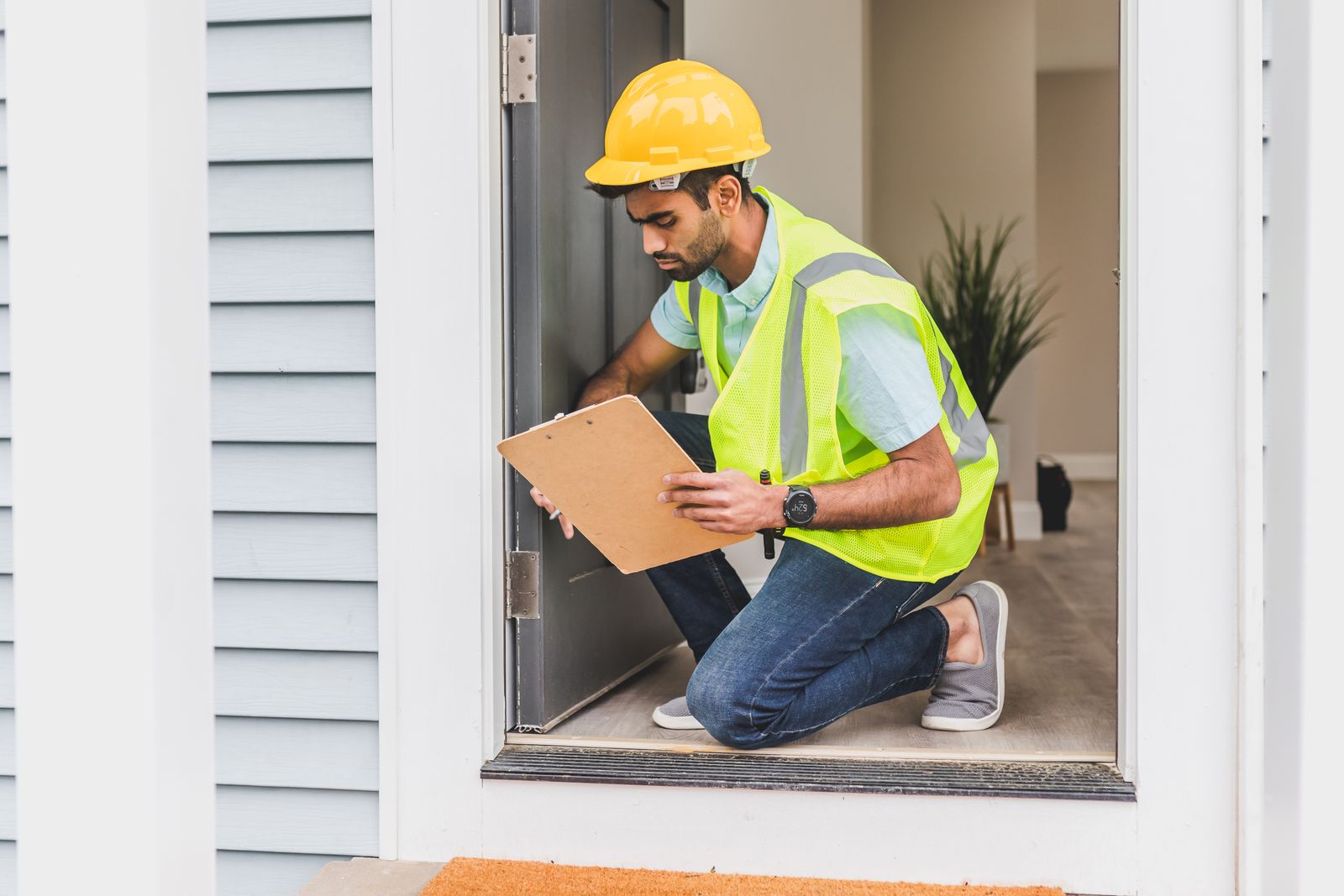
An AHERA-accredited inspector evaluates the materials, then removes small pieces — dampened first, sealed immediately in labeled containers — so sampling doesn't spread fibers.
Accredited laboratory analysis
Samples go to a lab accredited through NIST's National Voluntary Laboratory Accreditation Program (NVLAP), typically analyzed by polarized light microscopy for asbestos type and percentage.
Written report you can act on
Documented results for every material sampled, plus plain-language guidance: proceed normally, manage in place, or bring in a qualified abatement contractor first.

What Should Boise Homeowners Expect to Pay?
Less than most fear. Nationally, a professional asbestos inspection commonly lands between $250 and $850, driven mainly by how many materials need sampling; per-sample lab fees typically run $25–$75. Either end is cheap insurance compared with shutting down a half-finished remodel over suspicious tile — and every referral starts with a free, itemized quote.
Who Regulates Asbestos in Idaho? Mostly the EPA
Idaho is unusual: for most buildings, there is no state-run asbestos program. The federal asbestos NESHAP applies statewide, and for public, commercial, and institutional structures it is administered directly by EPA Region 10 in Seattle — that's where Idaho's required notifications go. Idaho DEQ holds delegated authority only for a small set of Tier 1 major facilities. In practice:
- Every demolition of a regulated facility requires notification to EPA Region 10 at least 10 working days before work starts — even when no asbestos was found.
- Renovations trigger notification when they disturb regulated asbestos-containing material beyond the NESHAP thresholds: 160 square feet, 260 linear feet on pipes, or 35 cubic feet.
- A thorough inspection comes first — the rule expects affected areas inspected for asbestos before renovation or demolition, which is what an AHERA-accredited survey documents.
- Homes of four or fewer dwelling units generally fall outside the NESHAP unless part of a larger commercial or multi-structure project. Exempt from paperwork isn't the same as safe: disturbing asbestos in a house can contaminate it for the people living there.
That's a plain-English summary, not regulatory advice — the authoritative sources are Idaho DEQ (deq.idaho.gov) and the EPA (epa.gov/asbestos). For commercial work or any demolition, see pre-renovation and demolition surveys.
Request a Free Asbestos Testing Quote
Describe the material or project, and a certified, insured local asbestos testing professional will follow up promptly with a clear price. No sales pitch, no alarmism — just a path to a lab-verified answer.
Rather talk? Call — two minutes is usually enough to price the job.
One rule while you wait: don't sand, scrape, break, or bag suspect material yourself. Disturbance is what sends fibers airborne — let the professional collect samples with proper methods.
Boise Asbestos Questions, Answered
What's the difference between asbestos testing and asbestos inspection?
They overlap. "Testing" means sampling a specific material — a ceiling, a tile floor — for a lab result. An "inspection" or survey is broader: an accredited inspector identifies every suspect material in the work area, samples systematically, and produces a report. Small projects need testing; renovations, demolitions, and commercial jobs need an inspection. Either way, the lab makes the call.
Is it safe to live with asbestos materials that aren't damaged?
EPA guidance is consistent: intact, undisturbed asbestos-containing material generally does not release fibers, and managing it in place is often the right choice. The hazard appears when material is cut, drilled, sanded, crushed, or demolished — and since no safe exposure level has been identified, know what you have before anything disturbs it.
How fast can I get results in the Treasure Valley?
A residential visit is usually scheduled within days, and standard lab turnaround runs about 2–5 business days. Most labs offer rush tiers — 48-hour, 24-hour, sometimes same-day — for deals in escrow or crews standing by. Mention your deadline when requesting a quote.
Can't I just mail in a sample with a DIY kit?
The kit still asks you to cut into the material — the exact step trained samplers control with wetting agents, sealed containers, and protective gear. It also yields no inspector documentation, which contractors, buyers, and permitting agencies frequently want. For anything tied to a renovation, sale, or insulation, professional sampling is worth the difference.
What happens if the lab finds asbestos?
You'll have it in writing: the material, the asbestos type, and the percentage. Options run from managing in place to encapsulation to removal by a qualified abatement contractor — your inspector can explain which fits. Testing stays separate from abatement on purpose: the person analyzing your home earns nothing from a positive result.
Serving Boise and the Whole Treasure Valley
Partner professionals cover Ada and Canyon Counties: Boise proper — North End, East End, the Bench, Vista, Collister, Garden City — plus Meridian, Nampa and Caldwell, Eagle and Star, Kuna, Middleton, and Emmett. Anywhere within a reasonable drive of I-84 or the Boise River Greenbelt, an inspector can typically reach you within days.
Get the Answer Before the Demo Bar Swings
One inspection now beats a stalled remodel later. Free quotes, lab-verified results in days.